- Home
- Retainers and Aligners
Retainers and Aligners
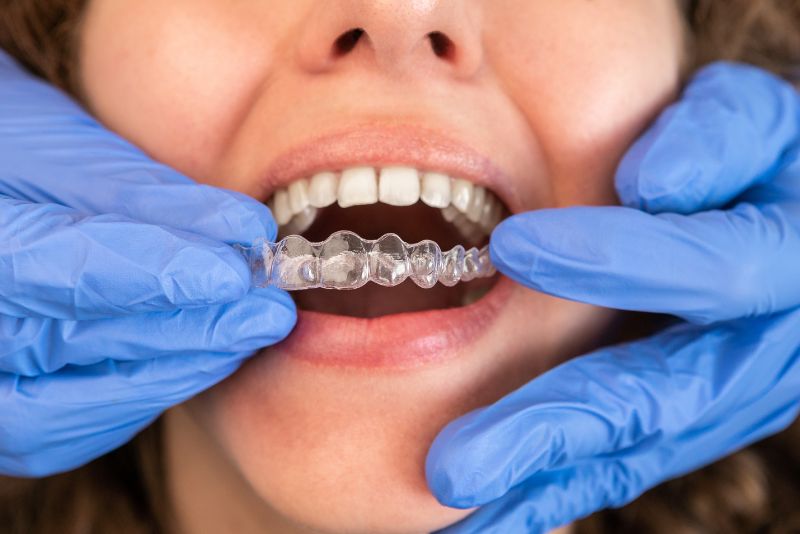
Retainers and aligners are both used to straighten teeth, but each serve slightly different purposes and are used at different stages of orthodontic treatment. Here’s an overview to understand your options when seeing our Orthodontists.
1. Aligners (like Invisalign)
- Purpose: Aligners are clear, removable trays designed to gradually move teeth into their correct positions. They are an alternative to traditional braces and are used during the active phase of orthodontic treatment.
- How they work:
- Aligners are custom-made based on a digital scan of your teeth.
- Patients typically wear a series of aligners, with each tray shifting the teeth slightly.
- Aligners are usually worn for 20-22 hours per day, except when eating, drinking, brushing, or flossing.
- The trays are changed every 1-2 weeks, with each new set moving the teeth closer to the desired position.
- Advantages:
- Virtually invisible, making them aesthetically pleasing.
- Removable, so there are no food restrictions.
- Easier to clean compared to traditional braces.
2. Retainers
- Purpose: Retainers are used after the active phase of orthodontic treatment to maintain the new position of the teeth and prevent them from shifting back to their original positions.
- How they work:
- After the teeth have been straightened with aligners or braces, a retainer is worn to “retain” the position.
- Retainers can be either removable or fixed (bonded to the back of the teeth).
- They are typically worn full-time at first and then gradually reduced to nighttime wear as advised by an orthodontist.
- Advantages:
- Prevents relapse, ensuring that the results of orthodontic treatment last long-term.
- Helps keep the bite stable and aligned.
Why Both Aligners and Retainers Can Be Used?
- Aligners actively move the teeth into alignment during treatment, while retainers are crucial for holding the teeth in place once the active treatment phase is completed. Without retainers, teeth can shift back to their original positions over time due to the natural movement of teeth, which is why retainers are an essential part of maintaining a straight smile after treatment.
A root canal is a dental procedure used to treat infections or damage deep within the tooth. It’s performed when the pulp (the soft tissue inside the tooth containing nerves, blood vessels, and connective tissue) becomes infected or inflamed due to decay, injury, or a cracked tooth. The procedure involves removing the infected or damaged pulp, cleaning the inside of the tooth, and sealing it to prevent further infection.
NEW PATIENTS ONLY SPECIAL!
Book by 4/30/2024. Restrictions may apply. Contact us for details.
Cleaning + PerioProtect Combo
Schedule by 4/30/2024. Restriction may apply. Contact us for details.
SMILE WITH CONFIDENCE!
BRACES or INVISALIGN. 0% Financing Available. Restrictions may apply. Contact us for details.
FREE EXAM & X-RAYS
Membership in Dental Alliance (DA) required. DA offers a discount program for dental care.
Deep Cleaning + PerioProtect Combo
Schedule by 4/30/2024. Restriction may apply. Contact us for details.